
The Israelites had come so far; out of Egypt, through the sea and across the great Sinai desert. Yet, in many ways they were mentally, emotionally and spiritually still in slavery. Their attitude was like God had never parted the sea and allowed them to cross on dry land. Now here they were on the edge of inheriting all God promised, and the slave mentality was rising up to block their path. Moses had learned a thing or two about leadership growing up as part of the Egyptian royal family. He had learned even more since his encounter with the burning bush. So it makes sense that he would send out some spies to scout out the land God’s people were about to take possession of.
Twelve spies when out to scout the land and when they returned there were two vastly different reports, making two opposing recommendations. All were agreed that the land was fertile and productive (they could hardly argue otherwise while bringing back a bunch of grapes so large it had to be carried on a pole between two men!) The difference of opinion seems to have arisen in regard to the nature of the inhabitants of the land. Ten of the Twelve described a land of fortified cities occupied by fearsome warrior tribes, some of whom were the direct decedents of the ancient giants in their origin stories.
When Caleb challenged the doom mongers and tried to rally the people to take the land, the reports became even more negative. The ten even went so far as to say that the land itself would devour them. They would be like grasshoppers in the eyes of such giants. But Joshua and Caleb remained convinced that the land was Israel’s for the taking. The warriors and their giants would be defenceless in the face of a, God empowered, nation of former slaves.
The same land, the same occupants, the same circumstances – but two vastly differing views. So what made the difference? Did Joshua and Caleb simply not see the giants? Were the other spies exaggerating out of fear? The truth is we will never know, though I suspect it might have been a little of each.
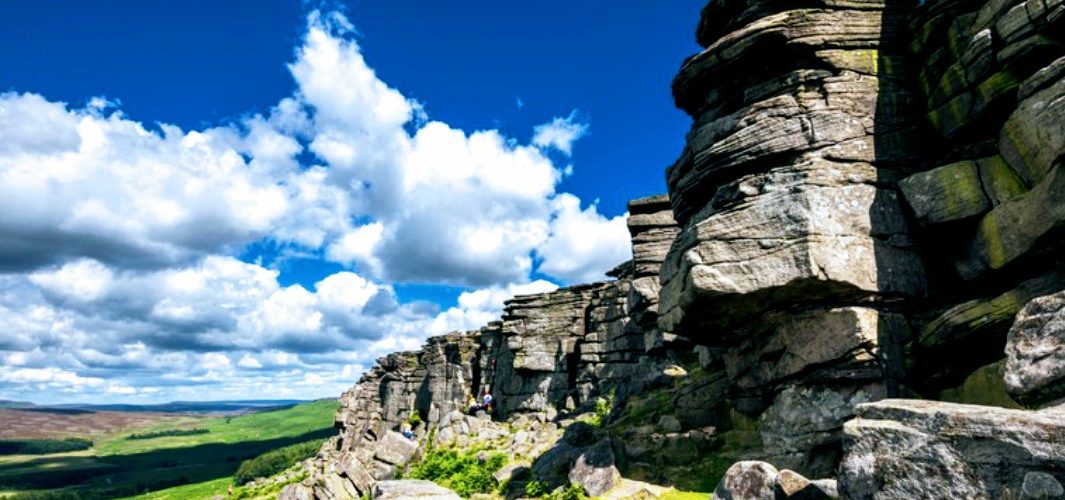
The way we choose to act when confronted with challenging circumstances, will be determined by how we view the challenge. Let’s use my family as an example. If while walking in the countryside we came across a rock escarpment blocking our route; my dad might see this as a great opportunity to get out the climbing gear and spend a happy few hours finding a route up the rock face. My brother would probably prefer to get out his map and figure out a route to take us around the obstacle. My natural instinct would be to see this as a good time to turn around and head to the teashop we passed a few miles back down the valley. Same challenge, three different people, three different approaches. My dad saw the rock barrier as a playground to be enjoyed and conquered. My brother, as an obstacle to be navigated around; and me as an indicator that enough was enough for one day, and it was time to head home.
How do you view the things that appear to be obstacles in the way of receiving God’s promises? Do you see a fertile and fruitful land, or warriors and giants? Do you think like a slave, or an heir? (Romans 8:15) In the end, Joshua and Caleb saw things differently because they no-longer thought like slaves. They did not see the land through the eyes of a victimised and oppressed people. They understood that when God had freed them from their Egyptian oppressors, it was to bring them into this very land. If God had lead them this far, why would he not lead them to occupy the land he had promised.
Through the work of Christ, we have been lead out of our slavery. We are no-longer victims of the enemy’s plans; we are children of God’s promise. We will still have to face giants and fortified cities from time to time; but if God is for us, then who can stand against us! When we see an obstacle in our path, we have a choice as to how we view it. We can see it as a sign that God has abandoned us, we can view it as our own failure; or we can see it as in invitation from God to a higher level of trust. If we are truly His children, surely we can expect bread and not a stone. Even if our loaf looks a little rock-like on first viewing; when we break it open, it will contain all the goodness we need. This is God’s promise and our hope.
Questions for Reflection:
Is it your natural tendency to think like a slave or like an heir?
What thoughts, beliefs or experiences stand in the way of you trusting God?
How might your current circumstances look different if your trust in God was total and you had no doubts or worries?